
Susan George in the anti-globalisation struggle
4 March by Eric Toussaint


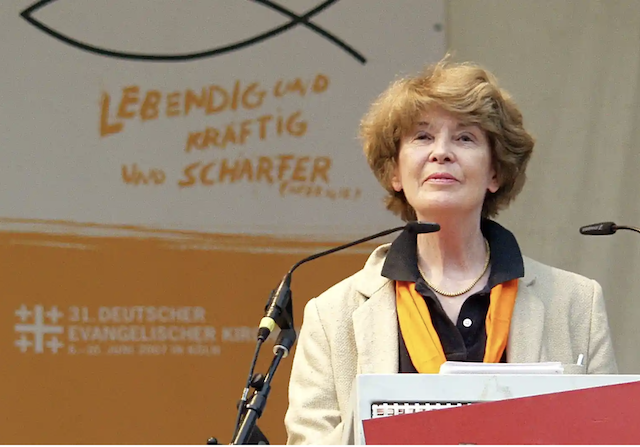
Susan George, in june 2007. CC BY-SA 4.0, Raimond Spekking.
Much has already been written in praise of Susan George, who died on 14 February 2026 at the age of 91. I will therefore limit myself to reviewing a few aspects of her work in relation to the themes and practices on which we converged.
Susan George was one of the authors who played a very important role in raising awareness in the global North about the issue of debt owed by countries in the global South. She devoted two powerful books to this subject, which had a significant impact in Europe, North America and industrialised countries in general: A Fate Worse Than Debt published in 1988, and The Debt Boomerang: How Third World Debt Harms Us All published in 1992. To these we can add Faith and Credit: The World Bank
World Bank
WB
The World Bank was founded as part of the new international monetary system set up at Bretton Woods in 1944. Its capital is provided by member states’ contributions and loans on the international money markets. It financed public and private projects in Third World and East European countries.
It consists of several closely associated institutions, among which :
1. The International Bank for Reconstruction and Development (IBRD, 189 members in 2017), which provides loans in productive sectors such as farming or energy ;
2. The International Development Association (IDA, 159 members in 1997), which provides less advanced countries with long-term loans (35-40 years) at very low interest (1%) ;
3. The International Finance Corporation (IFC), which provides both loan and equity finance for business ventures in developing countries.
As Third World Debt gets worse, the World Bank (along with the IMF) tends to adopt a macro-economic perspective. For instance, it enforces adjustment policies that are intended to balance heavily indebted countries’ payments. The World Bank advises those countries that have to undergo the IMF’s therapy on such matters as how to reduce budget deficits, round up savings, enduce foreign investors to settle within their borders, or free prices and exchange rates.
’s Secular Empire (with Fabrizio Sabelli, Westview Press), 1994 which takes a critical look at the history of the World Bank and the IMF
IMF
International Monetary Fund
Along with the World Bank, the IMF was founded on the day the Bretton Woods Agreements were signed. Its first mission was to support the new system of standard exchange rates.
When the Bretton Wood fixed rates system came to an end in 1971, the main function of the IMF became that of being both policeman and fireman for global capital: it acts as policeman when it enforces its Structural Adjustment Policies and as fireman when it steps in to help out governments in risk of defaulting on debt repayments.
As for the World Bank, a weighted voting system operates: depending on the amount paid as contribution by each member state. 85% of the votes is required to modify the IMF Charter (which means that the USA with 17,68% % of the votes has a de facto veto on any change).
The institution is dominated by five countries: the United States (16,74%), Japan (6,23%), Germany (5,81%), France (4,29%) and the UK (4,29%).
The other 183 member countries are divided into groups led by one country. The most important one (6,57% of the votes) is led by Belgium. The least important group of countries (1,55% of the votes) is led by Gabon and brings together African countries.
http://imf.org
.
Prior to that, from the 1970s onwards, she devoted her literary output to shedding light on the issue of world hunger, successfully reaching a wide audience in the North who were trying to understand the causes of the problems experienced by the peoples of the South. Her seminal work on this subject is How the Other Half Dies: The Real Reasons for World Hunger(Penguin, 1976).
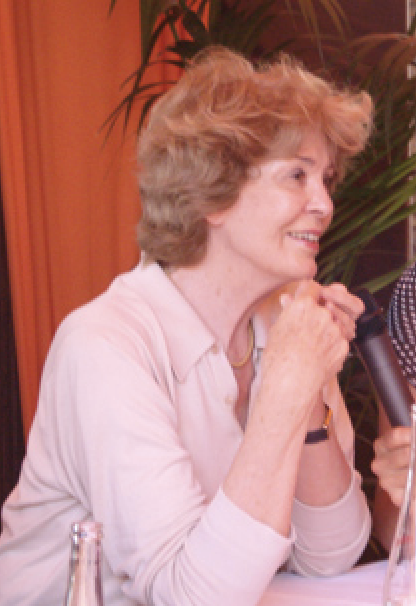
Susan George always linked her investigative work to activism with a view to bringing about social change in favour of the oppressed.
As soon as the Committee for the Cancellation of Third World Debt (CADTM) was founded in Belgium in 1990, she responded positively to our invitations. She participated in several major conferences organised by CADTM alongside Belgian Marxist economist Ernest Mandel, French writer Gilles Perrault, Vandana Shiva (India), Rosario Ibarra (Mexico), Nawal el Saadawi(Egypt), Bishop Jacques Gaillot, Albert Jacquard, Walden Bello and others. All of them were engaged in the same struggle for the cancellation of illegitimate and odious debts imposed on the peoples of the South. These conferences were generally attended by 600 to 1,200 people.
Intense collaboration continued in the second half of the 1990s around alternative activities to the Davos Economic Forum, opposing the annual meetings of the G7, the annual assemblies of the World Bank and the IMF (notably in Madrid in 1994 for the 50th anniversary of the Bretton Woods institutions) and the WTO
WTO
World Trade Organisation
The WTO, founded on 1st January 1995, replaced the General Agreement on Trade and Tariffs (GATT). The main innovation is that the WTO enjoys the status of an international organization. Its role is to ensure that no member States adopt any kind of protectionism whatsoever, in order to accelerate the liberalization global trading and to facilitate the strategies of the multinationals. It has an international court (the Dispute Settlement Body) which judges any alleged violations of its founding text drawn up in Marrakesh.
summits.
In 1998-1999, Susan George was deeply involved in the early days of the ATTAC association, and CADTM participated actively, notably by helping to create ATTAC Belgium. Susan George and CADTM were present at numerous international meetings, which reached their peak between 2001 and 2006 with the creation of the World Social Forum, which met for the first time in January 2001 in Porto Alegre, Brazil, and the European Social Forum in 2002 in Florence.
Throughout the 2000s and 2010s, the collaboration between CADTM and Susan George was intense. At the fifth world assembly of the CADTM international network held in Tunis, she sent a warm message of support, which we reproduce here:
"On 26/04/2016 at 17:02, Susan George wrote:
For many years, CADTM has been an indispensable resource for anyone who wants to know the truth about debt. When I was working on Third World debt in the 1980s and 1990s, CADTM accompanied me every step of the way.
Today, unfortunately, it remains an indispensable resource. Why unfortunately? Because more and more countries have fallen into the debt trap. They are all subject to the same devastating policies of “structural adjustment
Structural Adjustment
Economic policies imposed by the IMF in exchange of new loans or the rescheduling of old loans.
Structural Adjustments policies were enforced in the early 1980 to qualify countries for new loans or for debt rescheduling by the IMF and the World Bank. The requested kind of adjustment aims at ensuring that the country can again service its external debt. Structural adjustment usually combines the following elements : devaluation of the national currency (in order to bring down the prices of exported goods and attract strong currencies), rise in interest rates (in order to attract international capital), reduction of public expenditure (’streamlining’ of public services staff, reduction of budgets devoted to education and the health sector, etc.), massive privatisations, reduction of public subsidies to some companies or products, freezing of salaries (to avoid inflation as a consequence of deflation). These SAPs have not only substantially contributed to higher and higher levels of indebtedness in the affected countries ; they have simultaneously led to higher prices (because of a high VAT rate and of the free market prices) and to a dramatic fall in the income of local populations (as a consequence of rising unemployment and of the dismantling of public services, among other factors).
IMF : http://www.worldbank.org/
”, as it was called in the past, and “austerity”, as it is called today.
These countries are all prey to international capital and subject to the dictates of institutions such as the International Monetary Fund. Europe is no exception, and in European countries, particularly Greece, debt is an instrument of colonisation and oppression, just as it was – and often remains – for the countries of the South. As a result, more and more of us need the research and action of CADTM.
The figures could certainly be found elsewhere. But the great virtue of CADTM is that it always places them in the political context of 21st-century globalisation and acts on the basis of its encyclopaedic knowledge of the subject to help the victims find a way out.
In its early days, CADTM was essentially a ‘one-man show’, then a few comrades joined Éric Toussaint and today it is an international network holding its World Assembly in Tunis.
So many fields explored! So much ground covered! I am certain that your work will be fruitful and that we will always find you in the struggles that insatiable neoliberalism imposes on us. Allow me to pay special tribute to Éric and Fathi Chamki and to wish everyone a successful World Assembly and long life to CADTM — at least until it has finally won the fight against the debt that enslaves.
Susan George, Honorary President of Attac France, President of the Transnational Institute [TNI] (Source: 13383)
Susan George had great qualities as an author: she succeeded in making issues such as hunger, debt, the commodification of the world, and the neoliberal offensive understandable to a wide audience. She adopted a fluid, accessible writing style that was always well-researched without ever being ‘boring’. In most of her books and lectures, she also tried to show that citizens were taking action to change the world and that everyone could join the fight for emancipation. Jean Ziegler did the same in his books, and we converged in this approach. It is not enough to analyse, describe and denounce injustices; we must call for action to end them.
As a lecturer, Susan George always spoke in a calm manner, never raising her voice. Susan George did not harangue, she explained.
Susan George was not a revolutionary. She was in favour of profound change, but preferred the path of moderate, step-by-step reforms. In line with this, she participated in the creation of the Roosevelt Collective in March 2012 and, in 2013, joined the new political party Nouvelle Donne alongside Pierre Larrouturou.
In 2020, in the midst of the pandemic, we co-signed an international appeal for a Covid tax, which stated that “it is urgent to put wealth distribution on the agenda, i.e. the idea that high incomes and large properties should be taxed in the interest Interest An amount paid in remuneration of an investment or received by a lender. Interest is calculated on the amount of the capital invested or borrowed, the duration of the operation and the rate that has been set. of the community.”
In the last years of her life, she became more radical and in 2022 supported La France Insoumise, the Popular Union Parliament and Jean-Luc Mélenchon’s candidacy for the French presidency (see her short 2-minute 44-second video message).
Some personal memories. I first came to know Susan George through her books, in particular A Fate Worse Than Debt, published in 1988. This convinced me to invite her to the major conferences organised by CADTM in Brussels. From then on, we were in close contact and often shared a platform in different parts of the world. We had the opportunity to exchange views fairly regularly during the 1990s until around 2010.
I remember that on 20 December 2001, when the revolt that had broken out in Argentina against neoliberal policies was being brutally suppressed (39 dead), I received a phone call from her. She said to me: ‘Éric, we must do something together urgently because the Argentine people have risen up against the debt, against the IMF and its policies.’ And of course, we joined forces in support of the Argentine people.
I also remember a conversation between her and me in 2003-2004, when she learned that I had decided to write a doctoral thesis on the political issues surrounding the intervention of the World Bank and the IMF in Third World countries. She told me about the torment she had experienced in writing her own doctoral thesis.
In 2008, we met again at the Cannes Film Festival to present a documentary film that had been selected by Critics’ Week. In this film, entitled ‘The End of Poverty?’, filmmaker Philippe Diaz drew on the testimonies of people such as Susan George, Amartya Sen, Joseph Stiglitz and myself to make his documentary, which asked the question: ‘With so much wealth in the world, how can there be so much poverty?’ . Susan George and I presented the film at Cannes and took part in a street demonstration to spread its message. This gave us another opportunity to take stock of the international situation and the actions we supported.

Susan George was a very calm, almost reserved person. She wasn’t the type to slap her friends on the back, but in private she never missed an opportunity to have a laugh. In her lectures, she usually showed her sense of humour, and she was always very attentive to questions from the audience, trying to answer them by demonstrating that it was possible to try to change things. We really need people like Susan George.
Read other tributes to Susan George
– TNI and others: In Memoriam: Susan George (1934–2026)
https://www.tni.org/en/article/in-memoriam-susan-george-1934-2026
– Manuel Perez-Rocha “Remembering Susan George, a Shining Light of “Alter-Globalization”” https://znetwork.org/znetarticle/remembering-susan-george-a-shining-light-of-alter-globalization/
– Riccardo Petrella, ‘Death of Susan George: The Grande Dame of Anti-Globalisation’, published in French on 26/02/2026 https://www.lautjournal.info/20260226/deces-de-susan-george-la-grande-dame-de-laltermondialisme
– Geneviève Azam, ‘Death of Susan George, anti-globalisation figure and visionary environmentalist,’ Reporterre, published in French on 23 February 2026, https://reporterre.net/Susan-George-une-altermondialiste-ecologiste-s-est-eteinte
– ATTAC France, ‘Our friend and comrade Susan George has left us,’ published in French on 19 February 2026, https://france.attac.org/actus-et-medias/le-flux/article/notre-amie-et-camarade-susan-george-nous-a-quitte-es


is a historian and political scientist who completed his Ph.D. at the universities of Paris VIII and Liège, is the spokesperson of the CADTM International, and sits on the Scientific Council of ATTAC France.
He is the author of World Bank: A Critical History, London, Pluto, 2023, Greece 2015: there was an alternative. London: Resistance Books / IIRE / CADTM, 2020 , Debt System (Haymarket books, Chicago, 2019), Bankocracy (2015); The Life and Crimes of an Exemplary Man (2014); Glance in the Rear View Mirror. Neoliberal Ideology From its Origins to the Present, Haymarket books, Chicago, 2012, etc.
See his bibliography: https://en.wikipedia.org/wiki/%C3%89ric_Toussaint
He co-authored World debt figures 2015 with Pierre Gottiniaux, Daniel Munevar and Antonio Sanabria (2015); and with Damien Millet Debt, the IMF, and the World Bank: Sixty Questions, Sixty Answers, Monthly Review Books, New York, 2010. He was the scientific coordinator of the Greek Truth Commission on Public Debt from April 2015 to November 2015.
Other articles in English by Eric Toussaint (709)
1944-2024, 80 years of interference from the World Bank and the IMF, that’s enough !
The World Bank and IMF have set their sights on East Timor, a state officially born in May 200219 June 2024, by Eric Toussaint
1944-2024, 80 years of interference from the World Bank and the IMF, that’s enough !
From Paul Wolfowitz (2005-2007) to Ajay Banga (2023-...): the US President’s men control the World Bank12 June 2024, by Eric Toussaint
Argentina
The ETERNAL Norita!7 June 2024, by Eric Toussaint , CADTM International , Maria Elena Saludas
-
The Drums of War are Banging in Europe
6 June 2024, by Eric Toussaint , Paul Murphy , Miguel Urbán Crespo
1944-2024, 80 years of interference from the World Bank and the IMF, that’s enough !
The World Bank’s accounts5 June 2024, by Eric Toussaint
1944-2024, 80 years of interference from the World Bank and the IMF, that’s enough !
The Meltzer Commission on the IFI at the US Congress in 200029 May 2024, by Eric Toussaint
-
G7: Whether or not to maintain the suspension of Ukrainian debt payments
23 May 2024, by Eric Toussaint
1944-2024, 80 years of interference from the World Bank and the IMF, that’s enough !
James Wolfensohn switches on the charm (1995-2005)22 May 2024, by Eric Toussaint
-
The aborted experiment of the Bank of the South in Latin America and the alternative policies that could have been adopted at the continental level
15 May 2024, by Eric Toussaint
1944-2024, 80 years of interference from the World Bank and the IMF, that’s enough !
Presidents Barber Conable and Lewis Preston (1986-1995)15 May 2024, by Eric Toussaint
-
Towards an international anti-fascist convergence
23 March - Eric Toussaint, Guy Zurkinden -
Third list of prominent signatories of the International Call to strengthen antifascist and anti-imperialist action launched by CADTM International
20 March - CADTM International -
After the Labour Codes: the political meaning of India’s February 12 strike
27 February - Sushovan Dhar -
Global Front Against Neo-fascism and Imperialism: 565 Figures and 900 Activists from 100 Countries Form a Common Front
25 February - CADTM International, Collective -
First International Anti-Fascist Conference for the Sovereignty of Peoples in Porto Alegre: Resistance is now. It’s for the future! (Video)
17 February - CADTM International
-
FCEJ demands prioritizing marginalised communities in disaster preparedness, equitable relief and economic justice
4 December 2025 - Feminist Collective for Economic Justice -
Democracy & Debt: Reimagining Sovereignty in the Era of Global Financial Institutions
11 November 2025 - Eric Toussaint, Ikram Ben Said, Rob Davies, Shereen Talat, Jerome Phelps -
COP30 and the Brazilian dilemma
6 November 2025 - Gabriella Lima -
Philippines: Successful symposium on ‘Debt Chains and Displaced Lives: Confronting IMF-World Bank Legacies in the Global South’ on 10 June 2025 in Iligan
18 June 2025 - CADTM International -
Debt-dependency: What price are we paying?
11 June 2025 - Rovik Obanil
CADTM
COMMITTEE FOR THE ABOLITION OF ILLEGITIMATE DEBT
8 rue Jonfosse
4000 - Liège- Belgique
+324 56 62 56 35
info@cadtm.org
